Whether you're building a leadership team, scaling for creative, marketing, or product functions, or seeking a trusted search partner who truly understands your industry, we're here.
For general inquiries, partnerships, or company hiring needs, complete the form below or email us directly at info@burotalent.com.
Retail Marketing Leadership: Derek Yarbrough on Brand Transformation, AI & Modern Retail
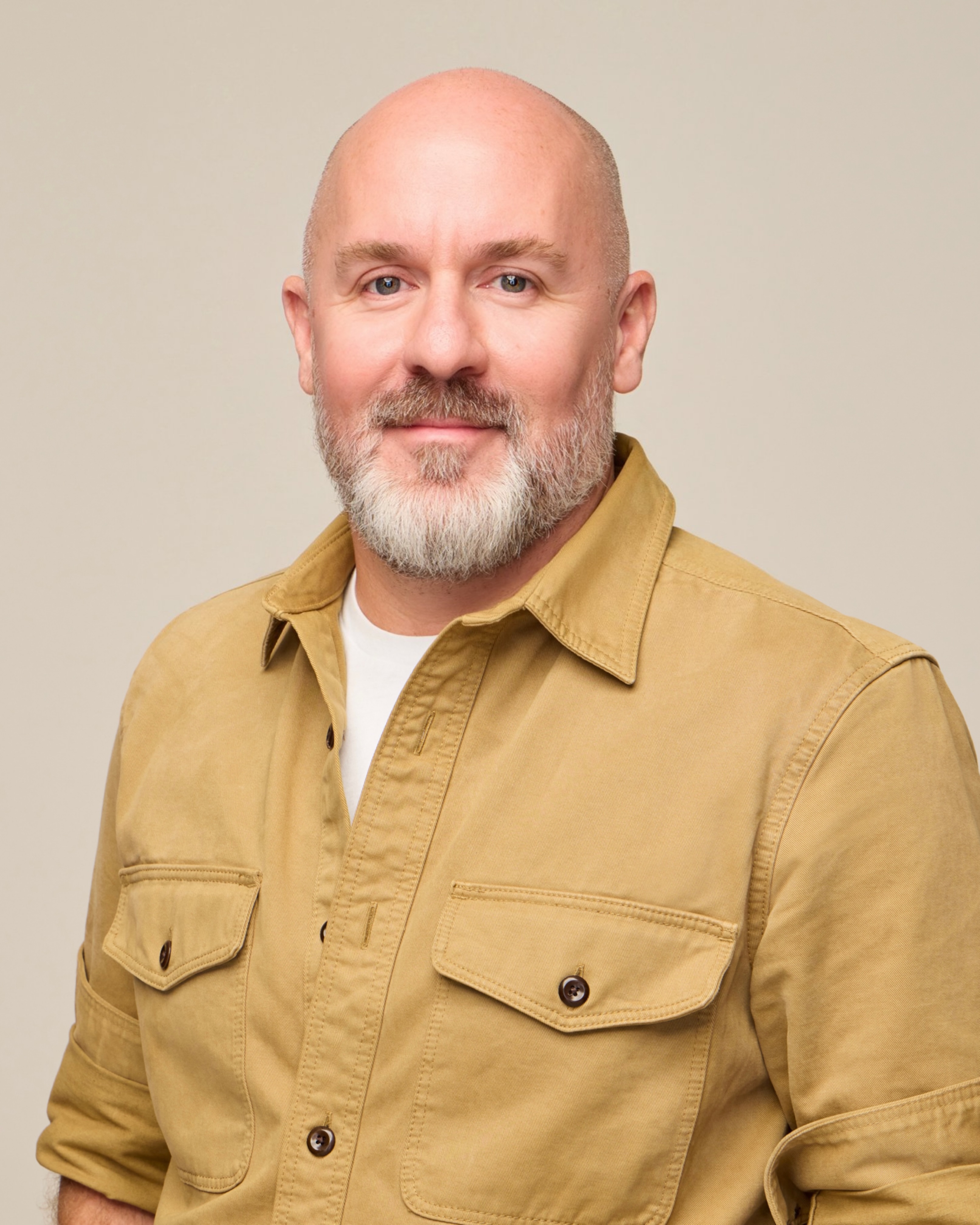
Derek Yarbrough, Retail Marketing Executive
The Spreadsheet and the Moodboard: How CMO Derek Yarbrough (Old Navy, JCrew) Balances Data, Creativity and Retail Leadership
Retail brands are navigating one of the most significant periods of transformation in decades. Consumer expectations continue to evolve, AI is reshaping marketing operations, and brands must balance performance marketing with emotional storytelling. Few executives have led through as many phases of retail evolution as Derek Yarbrough. As Chief Marketing Officer with experience at iconic American brands like Old Navy, J.Crew Group, and Walmart; Derek has helped iconic brands navigate growth, reinvention, and cultural relevance. In this conversation with Burō Talent, he shares perspectives on retail leadership, AI, customer experience, hiring great marketers, and what modern CMOs must do to build enduring brands.
Key Leadership Lessons from Derek Yarbrough
Great retail marketing leaders balance creativity with commercial performance. Derek Yarbrough believes the strongest brands succeed by combining "the spreadsheet and the moodboard," where data and design work together to drive business growth.
Retail transformation starts with a clear brand identity. Sustainable turnarounds come from reinforcing what makes a brand distinctive rather than chasing every new trend or campaign.
Physical retail has become a new discovery for younger consumers. Gen Z and Gen Alpha see stores, events, and tangible brand experiences as novel, creating new opportunities for experiential marketing.
AI should amplify expertise, not replace it. While AI improves efficiency, lasting competitive advantage still depends on original creativity, technical craft, and human judgment.
Modern retail marketing is built on emotional insights, not demographic assumptions. Successful brands focus on shared customer motivations and behaviors rather than relying solely on age, income, or other demographic segments.
Curiosity and humility are essential leadership traits. Derek looks for marketers who embrace continuous learning, hire people smarter than themselves, and remain deeply invested in the craft of marketing.
Meet Derek Yarbrough: Leading Retail Brands Through Transformation
As the Chief Marketing Officer at Old Navy, Derek Yarbrough is redefining how iconic heritage brands connect with modern audiences, blending a passion for cultural brand love with forward-thinking customer experience strategies.
A seasoned brand builder and retail transformational leader with over two decades of experience, Yarbrough has established a rare reputation for sitting comfortably at the intersection of "the spreadsheet and the moodboard". Prior to his role at Old Navy, he served as the Executive Vice President and Group Chief Marketing Officer at the J.Crew Group, overseeing a near-$200M budget and an internal team of 200 across J.Crew, J.Crew Factory, and Madewell. There, he successfully elevated marketing into an enterprise growth engine—pioneering massive e-commerce scaling, launching buzzy 360° global media campaigns, and spearheading early AI-driven initiatives and spatial metaverse experiences. Named one of Insider’s Top 25 Most Innovative CMOs of 2023, his career spans from the start-up days of Walmart.com to advising disruptive DTC apparel brands. His unique ability to marry technical marketing science with deep human empathy makes him a uniquely agile leadership talent.
Burō Talent sat down with Derek to hear about his journey steering legendary American portfolios, his philosophy on why physical retail feels entirely novel to a new generation of consumers, and why he views modern marketing as a continuous practice of anthropology.
Career Journey: From E-Commerce to Retail Marketing Leadership
Burō Talent (BT): You have a successful career and have worked on many exciting projects/initiatives. You’ve mentioned in previous interviews that the Madewell “What Are You Made Of?” campaign was one of the most meaningful of your career. We love that and we want to flip it on you - What Are You Made Of, Derek? What does that question mean to you personally and professionally?
Derek Yarbrough (DY): Oh, I love this question. "What Are You Made Of?" worked because it wasn't a statement, it was an invitation — it asked the customer to answer for themselves instead of being told who they are. I've spent my career chasing that same instinct in marketing: don't tell people who to be, give them language for who they already are.
Personally, the honest answer starts on a military base in Colorado, then rural Oregon — a small-town, working-class kid, curious about everything, dreaming of a bigger life traveling the world and living in a big city. I'm made of that: a flat-out belief in showing up and working hard for the life you want instead of waiting for it. When I finally "got out," I realized my dad gave me the gift of self-reliance, a world-class college education taught me how to think, and a career let me actually live in the cities I used to dream about — San Francisco, Los Angeles, New York, Miami, Paris, Rome. I'm made of that self-reliance, that love of exploration, and that love of culture.
Professionally, all of that — the self-reliance, the curiosity, the love of culture — shows up the same way: equal parts grit and curiosity, art and science. I'm comfortable in both the spreadsheet and the moodboard. I don't fully trust marketers who only love the craft, and I don't trust the ones who only love the dashboard. I'm made of both, and I've built a career — and now a team — around holding both at once.
BT: Marketing is very much the balance of Art and Science. Historically, retail/fashion brands have leaned towards more brand, creative marketers but you camp up through the e-commerce side of marketing. How did you bridge that to be successful in a 360 CMO role?
DY: I'm a big believer, more than ever, that in marketing everything is brand and everything is performance. Every consumer interaction is an opportunity to be creative, to differentiate, to reinforce a brand's value proposition, and delight the consumer — whether an existing customer or someone discovering your brand for the first time. No matter what channel you're working on, what level of the funnel you're targeting, it's about brand storytelling and consumer truth. If you always keep the brand and customer as the north star, you will be good.
And frankly, this extends beyond marketing. The product is brand. The store is brand. The associates are brand. For a great retailer, every aspect of the experience is rooted in brand and customer.
BT: You’ve worked on iconic American brands throughout your career — Walmart, Madewell, J.Crew and now Old Navy. You seem to enjoy Retail Brand Building, what is the allure that draws you to American Retail and why it continues to fuel your career passion — industry and work?
DY: I'm a definitive child of the 80s and 90s, growing up at the height of shopping malls, John Hughes films, and MTV — Madonna, George Michael, The Cure, REM, Alanis Morissette. It was a real zenith of pop culture, when American style was ascendant: you had legacy brands like Levi's holding strong alongside the meteoric rise of Nike, Tommy Hilfiger, Gap, J.Crew, Esprit. Even European brands like Adidas, Benetton, and Lacoste were borrowing from Americana style: prep, hip hop, workwear. The fashion was cool, casual, and colorful — denim, white tees, colorful rugbies, cool sweatshirts.
That era wired something into me that's never left: American retail at its best isn't aspirational in a stuffy way, it's aspirational in a democratic way — anyone could buy the white tee and feel like part of the story. That's still the allure for me today, and it's exactly why I keep choosing to help write the next chapter for brands like these, whether it was Madewell, J.Crew, Old Navy.
BT: Post-COVID, consumers craved more physical, human brand experiences again. After years of digital-first thinking, it feels like the pendulum has swung back heavily toward experiential, in-store, in-person. Do you feel the shift? What are your thoughts on this and how should brands/marketers balance this ahead?
DY: I wouldn't call it a swing back so much as a discovery. This shift isn't really Millennials and Gen X feeling digital fatigue and getting nostalgic — it's Gen Z and Gen Alpha being genuinely curious about what the world was like before smartphones and social media. They never lived in that world, so a physical store, a printed zine, a film camera, even a flip-phone isn't nostalgic to them. It's novel.
That reframes the job for marketers. It's not digital versus physical, it's making sure the physical world earns its keep — that walking into a store or showing up to an event delivers something a feed can't: texture, scale, serendipity…other humans(!). The brands that win the next decade will treat digital as the megaphone and physical as the proof, designing every store, event, and piece of packaging knowing it's probably getting filmed and shared within seconds, whether they planned for that or not.
BT: This spring, Old Navy launched a collaboration with Christopher John Rogers (a designer who, interestingly, was mentored by a previous guest of ours, Jonathan Saunders). What makes a collaboration actually work? How do you avoid consumer fatigue when everyone seems to be doing one?
DY: I actually love that there are so many collaborations — I mean, not all of them are good ones, but I do think it has fueled creativity and consumer interest. At the end of the day, a great collaboration is truly rooted in creativity — mashing up the worlds of two brands into something new and special. I believe a collaboration can only be successful if each brand first knows who it is and knows its codes. The merging of those codes becomes what draws the consumer. Make it special, make it scarce.
I'm a total nerd about creative process, so watching our design and marketing teams’ collaborative process (led by Zac Posen) — first with Anna Sui, then with Christopher John Rogers — has been thrilling. I also just love the idea of bringing great design to a mass audience.
AI in Retail Marketing and the Future of Brand Building
BT: AI is changing what’s possible in marketing constantly — efficiency, speed, personalization, scale. Is there ever a worry we risk being less original, less creative, less human, less surprising? How do Old Navy/Gap leverage AI?
DY: Yes, there is an enormous risk on several levels, especially for original ideas. Ultimately, LLMs are an amalgamation of everything that came before them, so they largely produce the median of that amalgamation. At the same time, I believe these early years of generative AI will be more focused on efficiency — but as it levels the playing field and the sea of sameness expands, we'll see that in order to break through and drive differentiation, investment in original creativity and true meaning will become increasingly important again. In a widening sea of slop, truly great design and original creativity will be what breaks through. So I'm hopeful.
Gap Inc. is probably more at the forefront of AI than most retailers, which has been exciting to experience. For my team specifically, I'm encouraging people to experiment as much as possible. I do have one principle, though: I don't believe anyone should be using AI to do someone else's job. You should use AI to do your own job better. A marketer shouldn't be doing legal analysis of a contract. A graphic designer shouldn't be using AI to write email copy. Technical expertise and craft is still very important — but when you combine craft with AI, that's very powerful.
Marketing to Everyone: Personalization at Scale
BT: Old Navy is one of America’s most inclusive brands — it is for everyone (income, size, age). In an era where algorithmic targeting is focused on hyperpersonalization and niche positioning, how does Old Navy maintain retail leadership and brand relevance while marketing to everyone without becoming nothing to anyone?
DY: This is such a great question, because the internet and social media have simultaneously flattened culture and created hyper-distinct audiences. The exciting and daunting work of a marketer in this landscape is to map universal truths that resonate across mass audiences while also creating stories and experiences that speak to specific ones. I'm a marketer who deprioritizes demographic targeting in favor of psychographic and aesthetic targeting.
For example, instead of targeting "35-to-44-year-old moms," we'll target people who care about color, comfort, and getting their whole family dressed without overthinking it — that psychographic exists across every income bracket, age, and body type. The universal truth underneath it is something like "getting dressed shouldn't be precious or expensive," and that holds whether you're a teenager getting ready for the first day of school or a parent doing the same for your kids. Anchor on the emotional truth instead of the demographic box, and you can speak to everyone authentically instead of speaking to no one specifically.
Reviving Iconic Retail Brands
BT: You’ve worked at brands in almost every phase of the retail lifecycle: growth, decline, reinvention. The comeback part of retail transformation is a particular kind of challenge, because you’re not just rebuilding awareness, you’re rebuilding trust. What does a brand actually have to do to earn that back? And what did you learn at J.Crew and Madewell about what it really takes to sustain a revival?
DY: In my transformation work at J.Crew and Old Navy, I actually think it's less about rebuilding trust and more about rebuilding perception — reigniting focus on what makes the brand unique and special and reminding people why they loved it in the first place. Internally, that's both about reigniting creativity, hyper focus on differentiation, and doubling down on great product storytelling: getting disciplined about what only this brand can say and do, then making sure every product, campaign, and store window is in service of that one story instead of fifteen different ones.
The harder lesson, especially from Madewell, is that sustaining a revival is more difficult than sparking one. The turnaround moment gets all the attention — the press, the sales lift, the cultural buzz — but the real test comes a year or two later, when the team has to resist chasing ten new ideas instead of going deeper on the one true idea that worked. The brands that sustain a comeback are the ones disciplined enough to keep saying the same true thing, just better and louder, instead of getting bored of their own breakthrough.
Hiring and Developing High-Performing Marketing Leaders
BT: The best marketers today have to be fluent in culture, technology, and commerce — the Art And Science we spoke about above. When you’re hiring , what do you look for that doesn’t show up on a resume?
DY: A resume tells you what someone has done; it almost never tells you how someone thinks or whether they're hungry. In an interview, I pay close attention to how a candidate talks about a project that didn't go well — do they own their part of it, or does the story conveniently have no flaws? I also love watching what people get excited about when we go off-script. The best marketers I've hired light up unprompted about something they nerded out on recently — a competitor's campaign, a piece of data that surprised them, a font choice. That kind of unscripted curiosity is the best predictor I've found of someone who'll still be great three years in, long after the job description from day one has changed twice over.
BT: How has your life/experience shaped the way you grow talent?
DY: I grew up in a family and community I'd call working middle class, in rural Oregon. We had what we needed, but we had to work hard to afford anything extra. I spent my summers in high school working seven days a week, graveyard shift, in industrial agriculture. I understand what it means to work hard with your body. Then, lucky enough to go to a great college, I understood what it means to work hard with your mind (while still working two jobs to pay for room and board!).
The best people I've hired and mentored throughout my career had that same work ethic, that hunger, and a complete lack of ego and privilege. I love analysts who nerd out on data, or creatives who nerd out on design — anyone curious who just loves doing good work. I'm allergic to privilege, politics, and being performative. It was the best part of being at J.Crew during what I call the golden days of Mickey Drexler and Jenna Lyons — two leaders who genuinely and wholeheartedly loved the detail, and the work of the work.
BT: What is the best advice you have ever been given by a mentor or someone you looked up to in your career?
DY: I believe Jeanne Jackson was the mentor who I first heard say to always hire people better than you. A players hire A players. B players hire C players — because a B player is scared of being outshone, and a C player never will be.
It only works, though, if you pair it with real humility — you actually have to want to be challenged, and occasionally proven wrong, by people on your team, not just say you do. I've tried to build my own teams around people who know more than me about something — a channel, a data set, what's happening in culture right now — and then get out of their way. The minute a leader starts hiring people who make them comfortable instead of people who make them better, that's the beginning of the org's decline.
Career Advice for Marketing Executives
BT: Can you share some advice for those experiencing career challenges at the moment — whether it is being swept up in layoffs, endless job applications, changing work environments (AI)? What has helped you to deal with disappointments and remain resilient?
DY: Surviving retail — especially fashion retail — is all about resilience. It's a never-ending cycle of reinvention: trends change, leadership changes, the consumer changes, the platforms change, and the businesses that survive are the ones willing to change with all of it without losing their own point of view. I've had projects I loved get killed. I've watched whole teams get restructured overnight. And I’ve had work that didn't generate expected outcomes. They are all learning opportunities. That's just the nature of this industry, and increasingly, the nature of most industries right now.
What's also helped me is separating my identity from any single job or title — the work is something I do, not something I am, and that distinction has carried me through every hard stretch. My advice to anyone navigating disruption or a challenging boss or layoffs or a brutal job search right now: stay close to your craft even when no one's paying you for it. Keep building the muscle, keep your point of view sharp, keep talking to people. The market eventually rewards the people who never stopped doing the work, even in the gap.
BT: What personal advice would you share with your younger self or next generation of marketers?
DY: Develop real craft, both technical and creative. Become fluent in customer insights — both qualitative and quantitative. And, especially as AI becomes more a part of everyday worklife, never stop asking questions of as many real people as possible: your merchant partners, store associates, existing customers, young consumers, your finance partners, other marketers, industry contacts. Never stop asking what they're seeing out there, what's exciting them, what's important to them. Marketing as anthropology. Always on.
The Future of Retail Leadership
Derek Yarbrough's perspective reinforces a common thread among today's most effective retail executives: the ability to combine analytical rigor with creative vision. As retail continues to evolve through AI, shifting consumer expectations, and omnichannel experiences, brands need leaders who can balance performance, culture, customer insight, and innovation. At Burō Talent, we partner with global retail, luxury, and consumer brands to identify transformational marketing, creative, digital, and product leaders equipped to navigate that complexity.
Hire Marketing Leaders Built for Modern Retail
The qualities Derek Yarbrough describes—curiosity, commercial discipline, creative vision, and the ability to lead through transformation—are exactly what today's retail, luxury, and consumer brands need from their leadership teams.
Burō Talent specializes in executive search for creative, marketing, digital, product, and commercial leaders who help brands navigate growth, reinvention, and changing consumer expectations.
Learn more about our Executive Search services or connect with our team to discuss your next leadership hire.
.svg)



.svg)

.svg)
